Key Themes and Discussions
The conference with the theme “Next-Gen Now: Reimagine. Recompose. Realise.”, provided a platform for industry leaders to discuss emerging technologies, digital transformation strategies and their impact on banking operations and customer experience.
Central to conference were sessions exploring the integration of AI, cloud and composable banking platforms and the role these technologies play in shaping next-generation banking models.
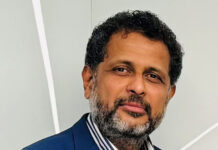
The CEO & MD, Infosys, Salil Parekh discussed the convergence of technology, talent and trust in driving digital enterprise transformation in a session titled Digital Enterprise Transformation. Sajit Vijayakumar, the CEO, Infosys Finacle spoke about how composable platforms, AI-powered digital capabilities and open ecosystems help banks create agile, resilient digital foundations. He reiterated how these approaches enable measurable improvements in customer engagement, operational efficiency and innovation-led growth.
Sangeet Paul Choudary, author of Platform Revolution and Reshuffle, examined the implications of platformisation and AI on value creation. He highlighted a shift from scale-driven advantages to intelligence and adaptability, noting how financial institutions can leverage these trends to build more responsive and future-ready organisations.
Matthew Griffin, founder and CEO of 311 Institute and XPotential University, offered insights on innovation and leadership in disruptive markets. He emphasised the need for cross-industry learning and rethinking traditional business approaches to unlock value in an AI-first economy.
Spotlight Sessions
The conference featured multiple sessions addressing strategic and technological priorities for banks worldwide.
In the session titled ‘Dominating the Digital Curve’, Miguel Rio Tinto (CIO, Emirates NBD) and Eugene Huang (CIO, DBS Bank) discussed how leading banks are redefining digital strategies at scale to enhance customer engagement and operational efficiency. AI-Native Banking: Ian Gillard (VP, Bangkok Bank) and Michal Plechawski (CIO & CTO, mBank) examined the evolution from AI-assisted operations to fully autonomous systems. They explored predictive and generative AI applications and governance frameworks shaping financial services.
- Next-Gen Platforms: Geoff Wenborn (COO, Bank of Sydney) and Minish Parikh (Clarien Bank) presented on cloud-native designs, SaaS delivery and composable architectures, highlighting how these approaches allow banks to innovate rapidly while maintaining compliance, security and performance.
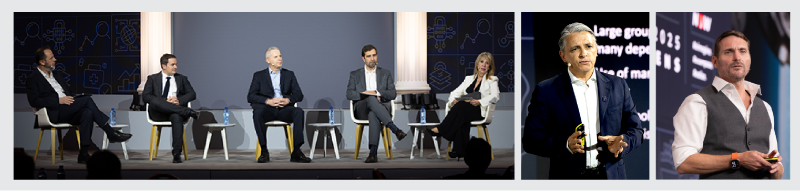
- Greek Banking Perspectives: Pavlos Mylonas (CEO, National Bank of Greece) and a panel of Greek banking executives—including Lefteris Kororos (Group CIO, National Bank of Greece), Anestis Petridis (Group CIO, Eurobank), Alexandros Emmanouil (CTO, Piraeus Bank), Nikolaos Vasilopoulos (Core Banking Applications Director, Alpha Bank) and Charoula Apalagaki (GM, Hellenic Bank Association)—discussed local priorities in an AI-led, platform-driven economy. Topics included customer-centric models, data utilisation, leadership alignment and cultural considerations for sustainable digital transformation.
- Next-Gen Corporate Banking: Khomotso Molabe (Group CIO, Standard Bank) and Chris J (Head of Product Management, Bank of America) addressed the evolution of corporate banking into intelligent, connected ecosystems. They highlighted the role of open APIs, real-time payments and AI-driven insights in delivering transparency and strategic value to corporate clients.
- Future Banking Trends: Daniel Frumkin (CEO, Metro Bank UK) provided an overview of trends reshaping global banking, emphasising the growing influence of AI on customer service, operational decision-making and strategy formulation.
- Digital Wealth Management: Vinod Yadav (CIO, Emirates Investment Bank) discussed next-generation wealth management platforms, including AI-driven advisory and hybrid service models. He highlighted the transition toward continuous, insight-led customer engagement.
- Banking Everywhere: Samuel Kirubi (Group COO, Equity Bank Limited) and Jack de Mooji (EVP, Robobank) examined Banking-as-a-Service and embedded finance. They outlined strategies for scaling compliant, composable ecosystems to deliver banking services across multiple channels.
- Stablecoins and Digital Assets: Parag K. Gupta (COO, Zand) discussed how stablecoins and digital assets are reshaping global finance. Sessions explored integrating traditional banking with emerging digital finance technologies to enable real-time, cross-border transactions.
Other discussions covered hybrid cloud infrastructures, secure banking environments, next-gen fee models and leveraging unified data insights through tools such as Infosys Aster. Case studies highlighted practical approaches to remain competitive in a rapidly evolving industry.
Global Collaboration and Knowledge Sharing
Finacle Conclave emphasised the value of cross-border collaboration and knowledge sharing. Delegates exchanged insights on regulatory and operational challenges, adoption of digital platforms, AI integration and customer experience optimisation.
The conference underscored that technology adoption alone is insufficient; successful digital transformation requires the integration of strategy, culture and leadership alignment. Real-world case studies demonstrated how banks can balance innovation with operational integrity, compliance and risk management.
Looking Ahead
Finacle Conclave 2025 concluded with discussions on the priorities for the coming year, laying a foundation for Finacle Conclave 2026. Delegates left with actionable insights on accelerating digital transformation, improving operational efficiency and implementing technology-enabled strategies.
The conference highlighted the growing importance of AI, cloud and composable platforms in enabling banks to adapt to changing customer expectations and market dynamics. By combining global leadership with regional perspectives, the conference offered practical guidance on navigating the complex, technology-driven landscape of modern banking.