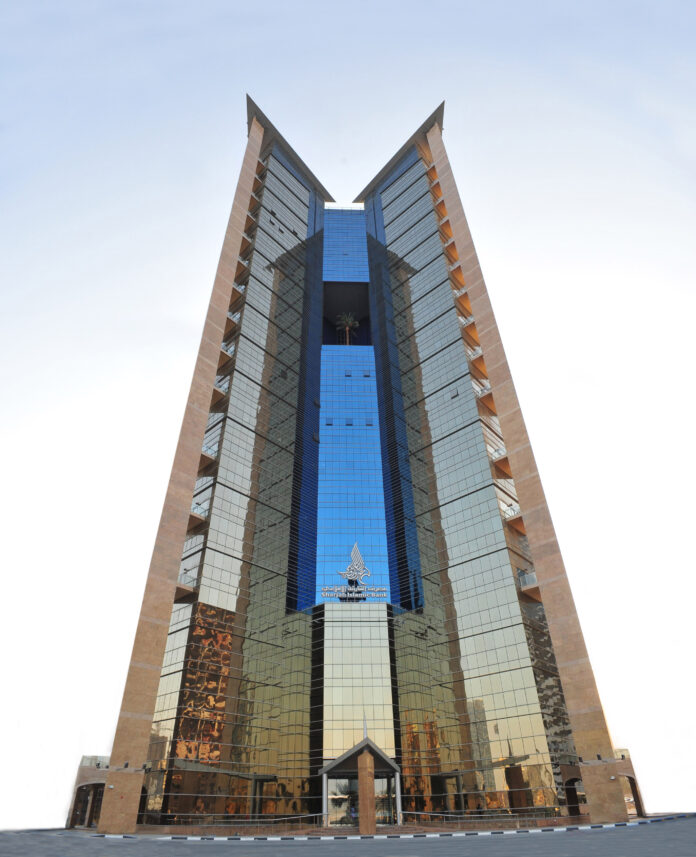
Sharjah Islamic Bank (SIB) continued to deliver strong financial performance during the first nine months of 2026, recording growth in net profit, supported by higher income from financing and investment activities, business expansion and improved operating efficiency. This was achieved alongside continued strengthening of the Bank’s financial position and capital base, reinforcing its capacity to sustain growth and execute its strategic priorities in the period ahead amid a challenging global economic environment.
The Bank recorded a net profit after tax of AED 1.2 billion during the first nine months of 2026, compared with AED 1.1 billion for the corresponding period of 2025, representing an increase of AED 100 million, or 9%. This performance reflects the resilience of the Bank’s business model and its ability to sustain profitable growth despite continued changes in the business and market environment.
Growth in Financing and Investment Activities and Diversification of Income Sources
Income from Islamic financing and Sukuk investments increased by 11.7% to AED 3.2 billion at the end of the third quarter of 2026, compared with AED 2.9 billion during the same period of the previous year, an increase of AED 336.6 million.
Total distributions to depositors and Sukuk holders amounted to AED 1.8 billion, compared with AED 1.7 billion during the corresponding period of 2025. This reflects the growth of the Bank’s business base and its continued focus on balancing the enhancement of returns with the delivery of value to its various stakeholders.
Meanwhile, net fee and commission income and other income amounted to AED 662.2 million, compared with AED 690.4 million during the same period of the previous year, representing a decline of 4.1%.
Supported by growth in financing and investment activities and across its various banking businesses, total operating income increased to AED 2.1 billion, an increase of AED 250.3 million, or 13.6%, compared with the first nine months of 2025. This reflects the broadening of the Bank’s revenue base and its ability to continue growing its business across diversified sectors and activities.
Continued Investment in Growth with Improved Operating Efficiency
As part of the Bank’s strategy to invest in human capital, digital and technology infrastructure, systems and processes, and enhanced customer experience, total general and administrative expenses increased to AED 726.6 million during the first nine months of 2026, compared with AED 619.0 million during the same period of the previous year, an increase of 17.4%.
Despite these investments, the Bank continued to improve its operating efficiency, with the cost-to-income ratio reaching 34.7%, compared with 36.1% at the end of 2025. This reflects the Bank’s ability to generate revenue growth at a faster pace than the expansion of its cost base, while continuing to direct investments towards business development and the infrastructure required to support future expansion.
Net operating income before impairment allowances and tax increased to AED 1.4 billion, compared with AED 1.2 billion during the same period of 2025, representing growth of 11.6%. This further underscores the strength of the Bank’s operating performance and its ability to generate sustainable income from its core activities.
Improved Asset Quality and Continued Prudent Risk Management
In terms of asset quality, net impairment allowances on financial assets, after recoveries, amounted to AED 42.1 million at the end of the third quarter of 2026, compared with AED 11.9 million during the corresponding period of the previous year.
At the same time, the asset quality indicators of the financing portfolio improved, with the non-performing financing ratio declining to 3.2%, compared with 3.8% at the end of 2025. The provision coverage ratio for non-performing financing stood at 108% as of 30 September 2026, compared with 109% as of the year-end 2025.
These indicators reflect the Bank’s continued prudent approach to risk and credit management, with a focus on asset quality and strengthening the resilience of the balance sheet to different business cycles.
Strong Growth in Assets, Financing and Customer Deposits
The Bank continued to expand its business base during 2026, with total assets increasing to AED 100 billion at the end of the third quarter, compared with AED 90.3 billion at the end of 2025, an increase of AED 9.4 billion, or 10.4%.
This growth was primarily driven by the expansion of the Islamic financing portfolio, which increased to AED 54.1 billion from AED 45.6 billion at the end of the previous year, representing growth of 18.9%. This reflects continued demand for the Bank’s Islamic financing solutions, as well as its ability to expand its business base and respond to the needs of its retail, corporate and institutional customers.
Customer deposits also increased to AED 60.4 billion, compared with AED 55.7 billion at the end of 2025, an increase of AED 4.7 billion, or 8.4%. This demonstrates the strength of the Bank’s deposit franchise and its continued ability to attract stable funding sources.
The financing-to-customer-deposits ratio stood at 89.7%, compared with 81.8% at the end of the previous year, reflecting effective deployment of liquidity to support business growth while maintaining strong liquidity levels.
Liquid assets stood at AED 21.2 billion, equivalent to 21.3% of total assets, compared with 22.3% at the end of 2025. This reflects the Bank’s continued balanced approach to liquidity management, supporting its growth requirements while maintaining a strong financial position.
Diversifying Funding Sources through Enhanced Presence in International Capital Markets
As part of its efforts to diversify funding sources and strengthen its presence in international capital markets, the Bank recorded a successful issuance of USD 500 million during the current period, equivalent to AED 1.8 billion increasing the Sukuk balance to AED 7.3 billion as of 30 September 2026. The issuance attracted strong demand from regional and international investors, reflecting confidence in the Bank’s creditworthiness and its position in Islamic finance markets.
Stronger Capital Base to Support Future Growth
Shareholders’ equity increased by AED 2.9 billion to AED 12.4 billion at the end of the third quarter of 2026, compared with AED 9.5 billion at the end of 2025. This was supported by the completion of the Bank’s capital increase through a rights issue during the second quarter of the year through the issuance of 1.1 billion shares, with a nominal value of AED 1 per share and an issue premium of AED 1.40 per share. This positively strengthened the Bank’s capital base and capital adequacy ratio, which increased from 16.17% at the end of 2025 to 19.37% at the end of the third quarter of 2026.
The capital increase represents an important step in the Bank’s strategy to enhance its financial capacity and provide a stronger and more flexible capital base to fund future growth, expand its business activities and capture investment opportunities in the Islamic banking sector. This supports the execution of the Bank’s strategic plans and strengthens its ability to deliver sustainable growth.
With these results, Sharjah Islamic Bank continues to reinforce its position as an Islamic financial institution with a growing business base and a strong financial position. The Bank benefits from diversified income sources, an expanding customer base, growth in its financing portfolio, enhanced digital and operational capabilities, and a stronger capital base. These strengths support its ambitions for sustainable growth and enhance its ability to create long-term value for shareholders, customers and the community.